
Summary: Black widows and brown recluses both live in Texas, and while most bites are not life-threatening, some need medical care. This guide explains how to identify each spider, which symptoms are commonly reported, when to call a doctor or Poison Control, and where they hide in Texas homes.
You reach into a box of holiday lights in the garage and feel a sharp pinch, or you spot a shiny black spider tucked under the lid of the water meter. Around San Antonio, Austin, and Dallas-Fort Worth, moments like these send a lot of people straight to a search bar, because black widows and brown recluses both live in Texas and both have a scary reputation.
The honest answer is that most bites from these two spiders are not life-threatening, but some do need medical care, and a few need it quickly. This guide covers how to recognize each spider, which symptoms are commonly reported after a bite, when to call a doctor or Poison Control, and where these spiders tend to hide in and around Texas homes.
Telling a Black Widow From a Brown Recluse
These two get mentioned in the same breath, but they look and act nothing alike. Getting a good look at the spider, or at least a clear photo, makes a real difference later if you ever need to describe a bite to a doctor.
The Black Widow and its Red Hourglass
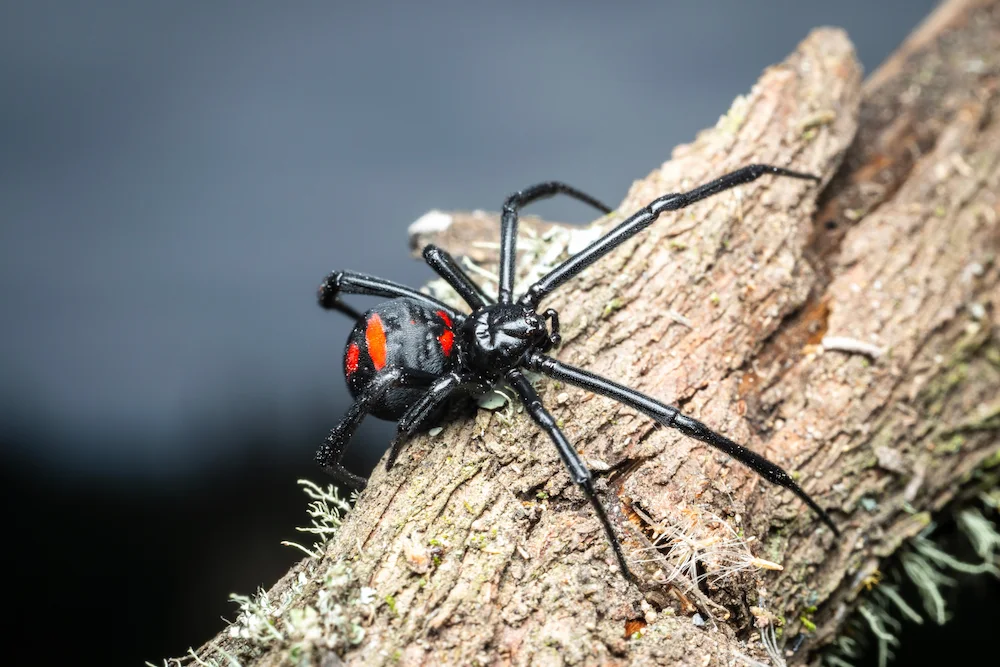
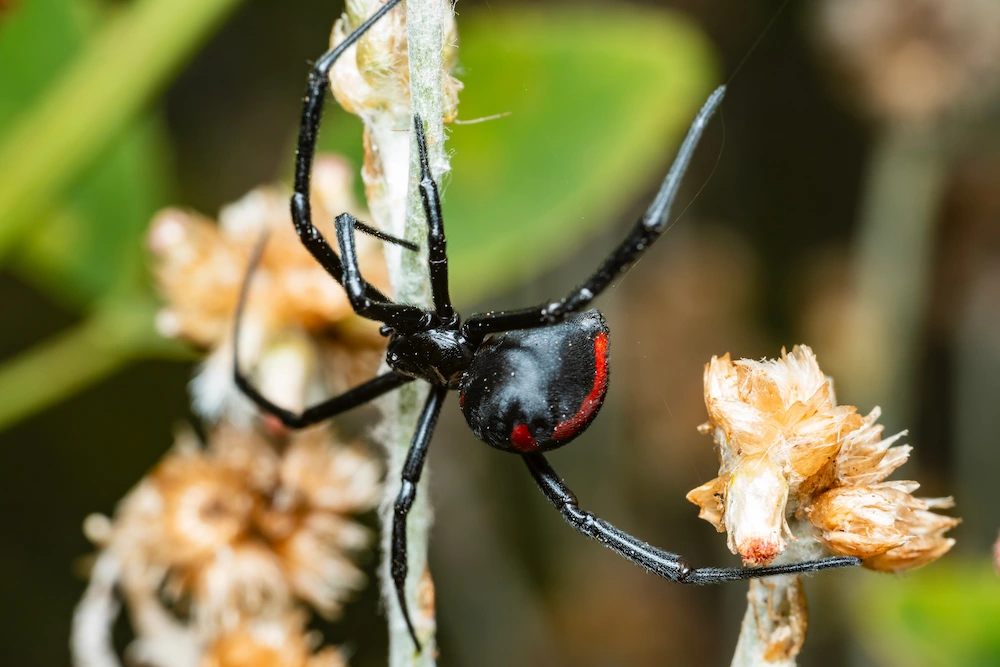
The southern black widow is the one Texans usually run into. Adult females are glossy black with a round, almost bulbous abdomen, and the body alone is roughly half an inch long. Flip one over (with a stick, not your fingers) and you’ll usually see a red or orange-red hourglass on the underside. On some spiders that hourglass is split into two separate marks instead of one clean shape.
Males and young spiders are a different story. They’re smaller, often brownish, and may have lighter streaks or spots, so not every widow you find will match the classic picture. Bites are mostly linked to adult females, which tend to stay put on their webs and bite when pressed against skin or trapped.
Their webs are a giveaway too. Widows spin messy, tangled, strong-feeling webs close to the ground, usually in a protected corner. If you brush one and it feels stickier and tougher than an ordinary cobweb, take a closer look before putting your hand back in there.
The Brown Recluse and its Violin Mark
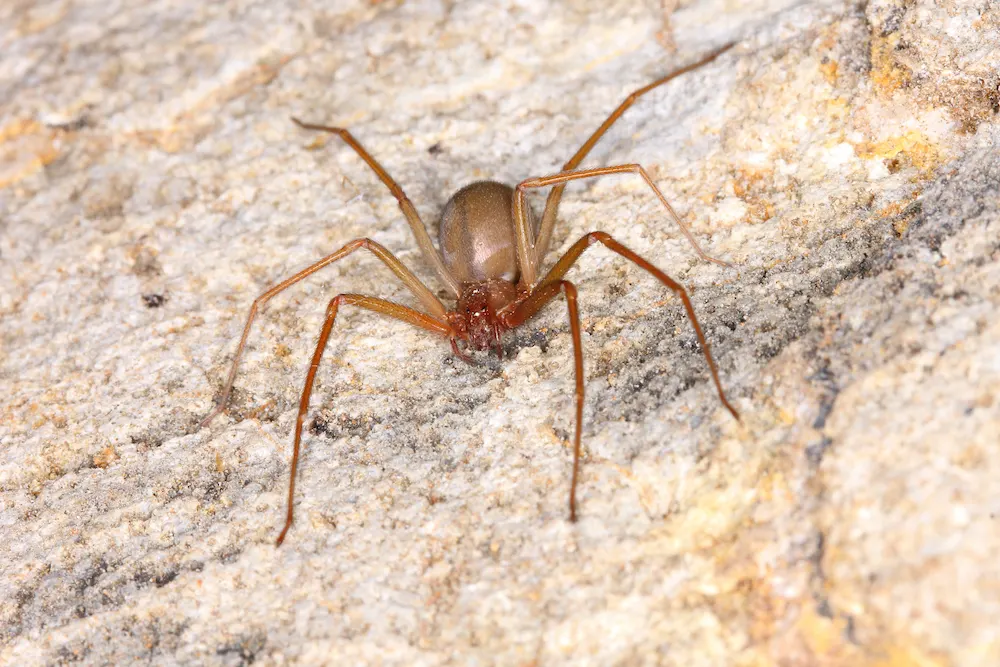
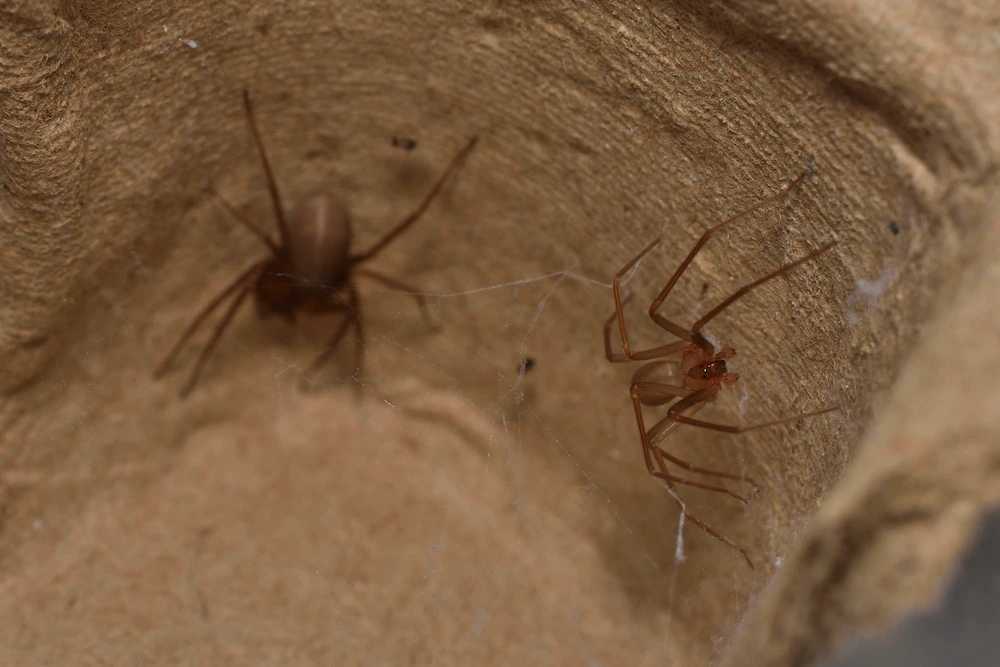
A brown recluse is light tan to medium brown with a darker violin-shaped marking on the front part of the body, the section where the legs attach. The neck of the violin points back toward the abdomen. The body is usually somewhere around a quarter to three-eighths of an inch, with long, thin legs that are a single plain color with no stripes or bands.
The violin can be faint, and plenty of harmless brown spiders get mistaken for recluses because of it. A more reliable clue is the eyes. Recluses have six eyes arranged in three pairs, while most spiders have eight, though you’d need a magnifying glass or a zoomed-in photo to check. Texas is also home to a close relative, the Texas recluse, which looks very similar and is treated with the same caution.
Behavior Clues That Help Identify Black Widows and Brown Recluses
Black widows sit in their webs and wait. Brown recluses wander at night to hunt and use their loose, irregular webs mainly as retreats, which is why they end up inside shoes, folded clothes, and bedding that touches the floor. Neither spider is aggressive. Most bites happen when someone accidentally presses one against their skin while getting dressed, reaching into storage, or moving firewood.
Commonly Reported Symptoms After a Bite
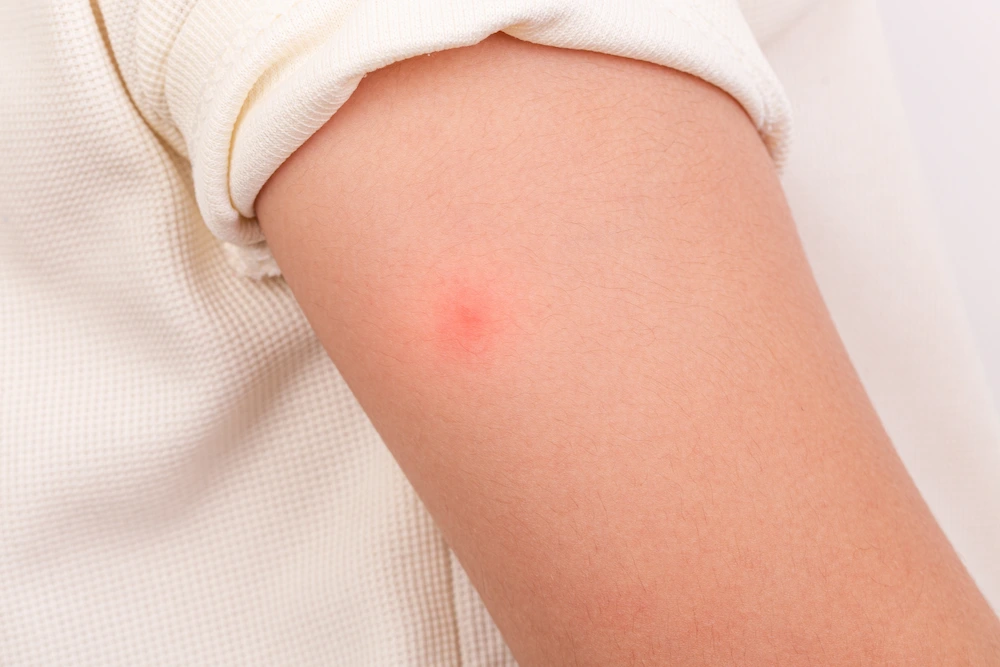
Every person reacts differently, and the amount of venom delivered varies a lot from bite to bite. Some bites deliver very little venom and cause little more than a small red mark. What follows is a general picture of what people commonly report, not a way to diagnose yourself.
Black Widow Bite Symptoms
Some people barely feel a black widow bite at first, while others describe a sharp pinprick. You may see one or two small puncture marks with mild redness or swelling. The venom affects the nervous system, so the bigger concern is what can happen over the next hour or several hours.
People who develop more serious reactions may notice muscle pain and cramping that spreads from the bite area into the back, belly, chest, or legs. The abdomen can become rigid. Sweating, nausea, vomiting, headache, restlessness, and a fast heart rate or high blood pressure have also been reported. These symptoms can be very painful and frightening, even though deaths from black widow bites are rare.
Brown Recluse Bite Symptoms
A brown recluse bite is often painless when it happens, so many people don’t realize they’ve been bitten until hours later. The spot may turn red and tender, sometimes with itching or burning. In some cases a blister forms, and the center may darken, turning bluish or purple while the edge stays red.
Most recluse bites stay small and heal on their own. A smaller number can develop into an open sore as the skin around the bite breaks down over several days, which may heal slowly and leave a scar. Less often, people report whole-body symptoms such as fever, chills, body aches, rash, or nausea, and those need prompt medical attention. Doctors also point out that many skin wounds blamed on recluses turn out to be infections or other conditions, which is one more reason to have a worsening sore looked at instead of guessing.
When to Call a Doctor, Poison Control, or 911
For any suspected black widow or brown recluse bite, contact a doctor, an urgent care clinic, or Poison Control. Poison Control in the United States is free and staffed around the clock at 1-800-222-1222, and the specialists there can help you decide whether the bite can be watched at home or needs to be seen. If you know or suspect which spider it was, tell them.
Basic steps while you make that call are simple. Wash the area gently with soap and water, and a cool compress may help with pain and swelling. Avoid cutting the skin, trying to suck out venom, or putting on home remedies. If the spider is still around and can be caught safely in a sealed jar, or photographed, bring it or the photo along.
Signs that Mean Emergency Care
Call 911 or go to the nearest emergency room right away for symptoms like these:
- Trouble breathing or swallowing, or swelling of the face, lips, or throat
- Chest pain, a racing heartbeat, or severe muscle cramps that spread beyond the bite
- Severe belly pain or rigid abdominal muscles
- Fever, chills, widespread rash, or dark urine after a suspected recluse bite
- A wound that spreads quickly, turns dark, or shows signs of infection
Extra Caution for Kids, Older Adults, and People with Health Conditions
Young children, older adults, and anyone with heart disease, high blood pressure, a weakened immune system, or another chronic condition may react more strongly to venom. A small child can’t always explain where it hurts, so unexplained crying, cramping, or a new skin sore after playing in the garage or a storage area deserves a call to the pediatrician or Poison Control. When in doubt, have the bite checked rather than waiting it out at home.
Where These Spiders Hide Around Texas Homes
Knowing their favorite spots is one of the best ways to avoid a bite. Both spiders want quiet, dark places where people rarely reach, and Texas homes offer plenty of those, especially in late fall when boxes come down from the attic and firewood gets stacked by the back door.
Black Widow Spots Outdoors and in the Garage
Around Schertz, Cibolo, and Helotes, widows commonly turn up in water meter boxes, irrigation control boxes, and the space under patio furniture and grills. Woodpiles, stacked bricks or pavers, and cluttered corners of sheds are favorites too, along with the gap under the lip of plastic planters and kids’ outdoor toys.
Inside, they lean toward garages and storage rooms rather than living space. Check the corners near the garage door, behind shelving, and around stored lawn equipment. Wearing gloves when you grab firewood, open a meter lid, or pull out storage bins goes a long way.
Brown Recluse Spots Indoors
Recluses are more comfortable inside the house itself. Attics, closets, the clutter under beds, and stacks of cardboard boxes give them shelter, and they’ll also use gaps behind baseboards, furniture that rarely moves, and the folds of clothing left on the floor. In storage rooms around New Braunfels and Boerne, the first recluse sighting often happens when someone pulls holiday decorations down for the season.
A few habits make a bite much less likely:
- Shake out shoes, gloves, and clothes that have been sitting in a closet or garage
- Pull beds a few inches from the wall and keep bedding off the floor
- Swap cardboard storage boxes for plastic bins with snug lids
- Use sticky traps along walls and in closets to see what’s moving at night
Sticky traps are worth a mention on their own. They won’t solve an infestation, but finding several recluses on one trap tells you the problem is bigger than a single stray, which is useful information to share with a technician.
Spider Help Around San Antonio and Beyond
Black widows and brown recluses both deserve respect, but most encounters end without anything worse than a scare. Learn the red hourglass and the violin mark, check the dark corners where each one likes to hide, and treat any suspected bite seriously by calling a doctor or Poison Control at 1-800-222-1222. Severe symptoms mean emergency care, without waiting to see if they pass.
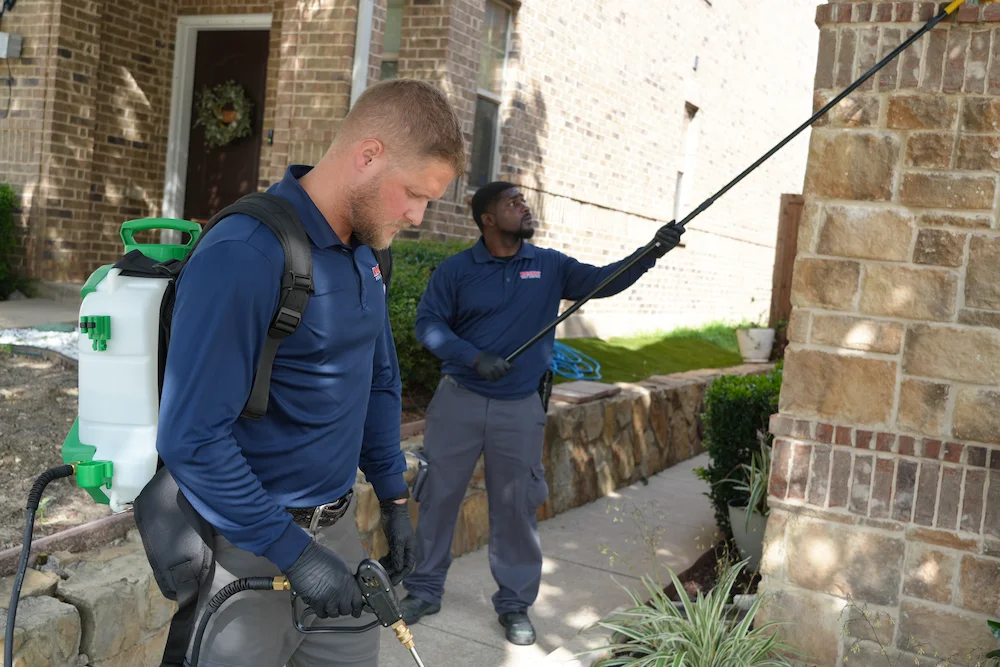
If you keep finding widows in the garage or recluses in the closet, it’s time to get some help. Romney’s quarterly plans cover spiders, and every scheduled visit includes sweeping the eaves, removing cobwebs within reach, and treating around the foundation and baseboards. Homeowners who want home pest control service that covers spiders can start with an inspection inside and out, and the team handling pest control in San Antonio also covers Boerne, Helotes, New Braunfels, Schertz, and Cibolo, with service up through Buda, Kyle, and Austin as well.
For a free quote on our reliable spider control services, contact us today!
Citations
Venomous spiders at work. (2026, September 28). CDC: National Institute for Occupational Safety and Health. Retrieved November 11, 2026, from https://www.cdc.gov/niosh/outdoor-workers/about/venomous-spiders.html