
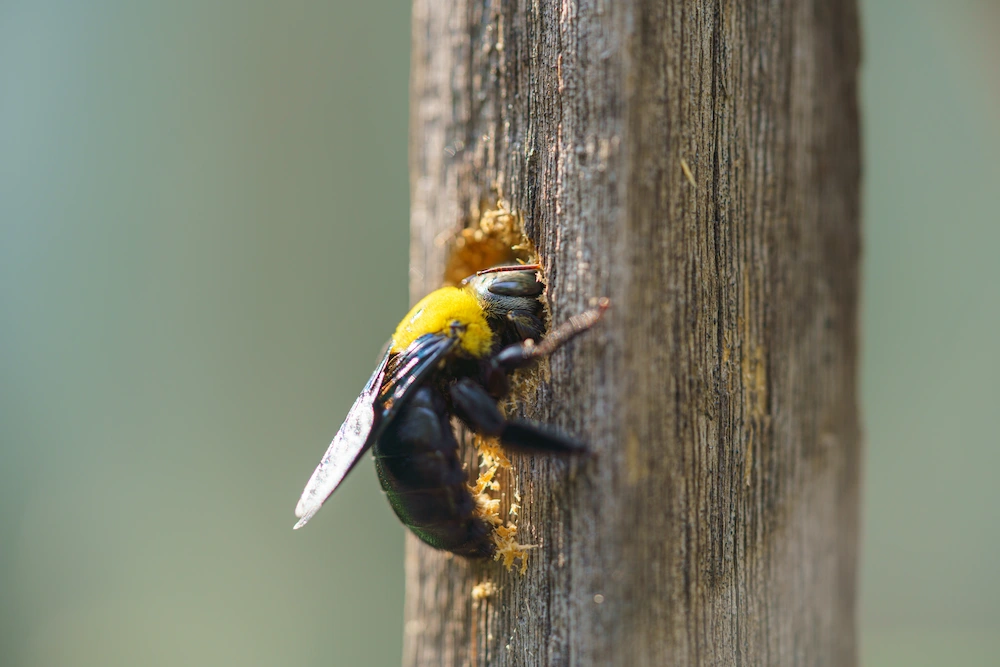
Summary: An educational guide exploring carpenter bee life and behavior, including nesting habits, feeding patterns, pollination activities, and practical homeowner insights.
Carpenter bees are often mistaken for bumblebees because of their similar size and appearance, but their behavior is quite different. These solitary pollinators play an important role in local ecosystems while also attracting attention from homeowners when they begin nesting in wooden structures.
Understanding carpenter bee life and behavior can help homeowners appreciate their role in nature while recognizing when their nesting activity may become a concern. From building tunnels in wood to foraging for nectar, carpenter bees have fascinating habits that set them apart from many other bee species.
Understanding Carpenter Bee Life and Behavior
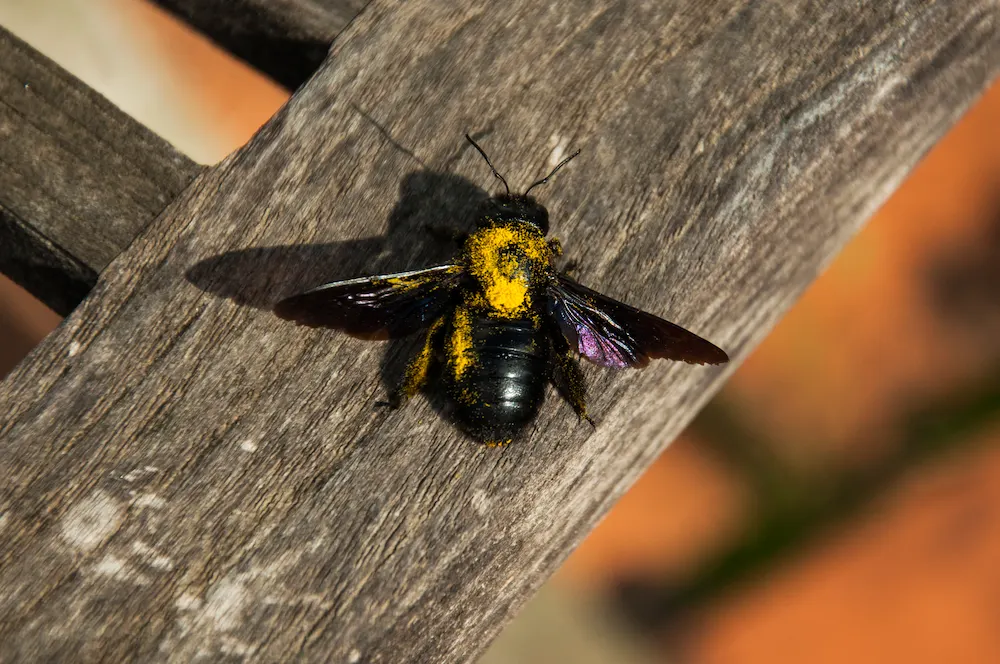
Unlike honey bees, carpenter bees do not live in large colonies with thousands of workers. Most carpenter bees are solitary insects, meaning each female is responsible for building and maintaining her own nest.
Male carpenter bees are often seen hovering near nesting areas and may appear aggressive when people approach. However, males do not have stingers and cannot sting. Female carpenter bees can sting, but they rarely do unless directly handled or threatened.
Their independent lifestyle is one of the most interesting aspects of carpenter bee life and behavior and contributes to their unique nesting habits.
How Carpenter Bees Build Nests
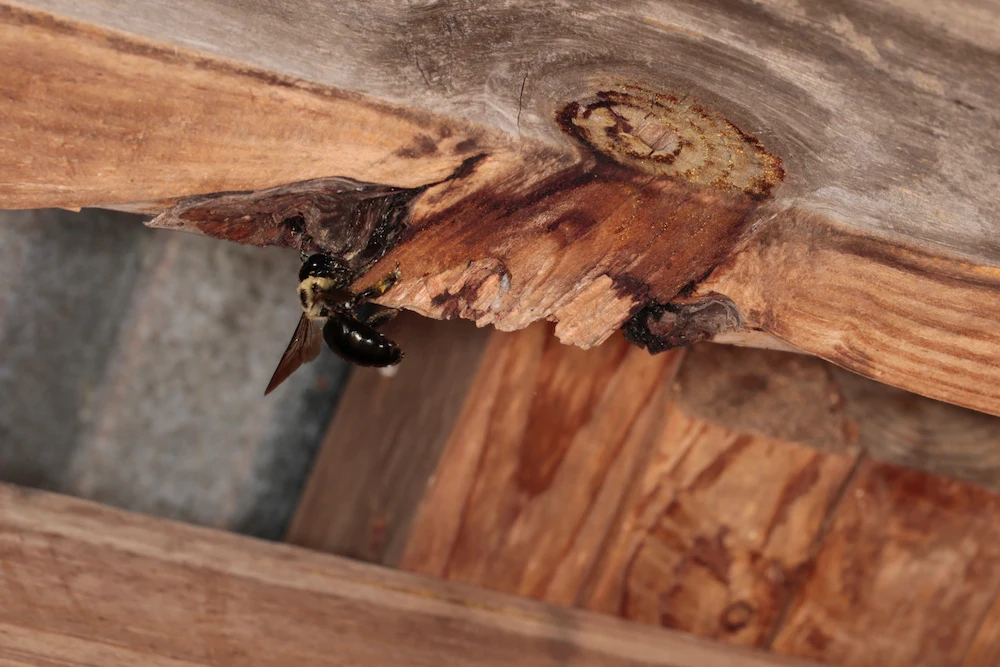
Many homeowners become curious about how carpenter bees build nests after noticing perfectly round holes in wooden surfaces. Unlike termites, carpenter bees do not eat wood. Instead, they excavate tunnels to create protected spaces for raising their young.
Female carpenter bees use their strong jaws to bore into untreated or weathered wood. Common nesting locations include decks, fences, wooden siding, eaves, and outdoor furniture.
After creating an entrance hole, the bee tunnels several inches into the wood and constructs a series of chambers. Each chamber receives pollen, nectar, and an egg before being sealed off. This process provides developing larvae with the food they need until adulthood.
Carpenter Bee Nesting Habits
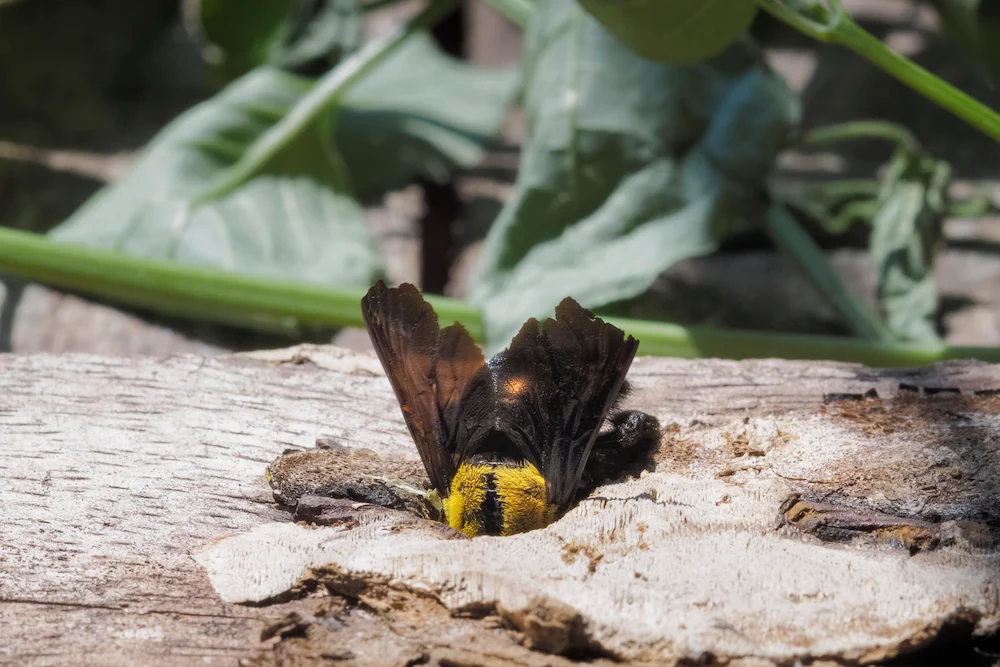
Understanding carpenter bee nesting habits helps explain why these insects often return to the same locations year after year. Once a suitable nesting site is found, future generations may reuse and expand existing tunnels.
Carpenter bees prefer soft or untreated wood because it is easier to excavate. Areas exposed to sunlight are often especially attractive. Over time, repeated nesting activity can create extensive tunnel networks within wooden structures.
While occasional nesting usually causes only cosmetic damage, long term activity may weaken wood and attract other pests that take advantage of the openings.
What Do Carpenter Bees Eat?
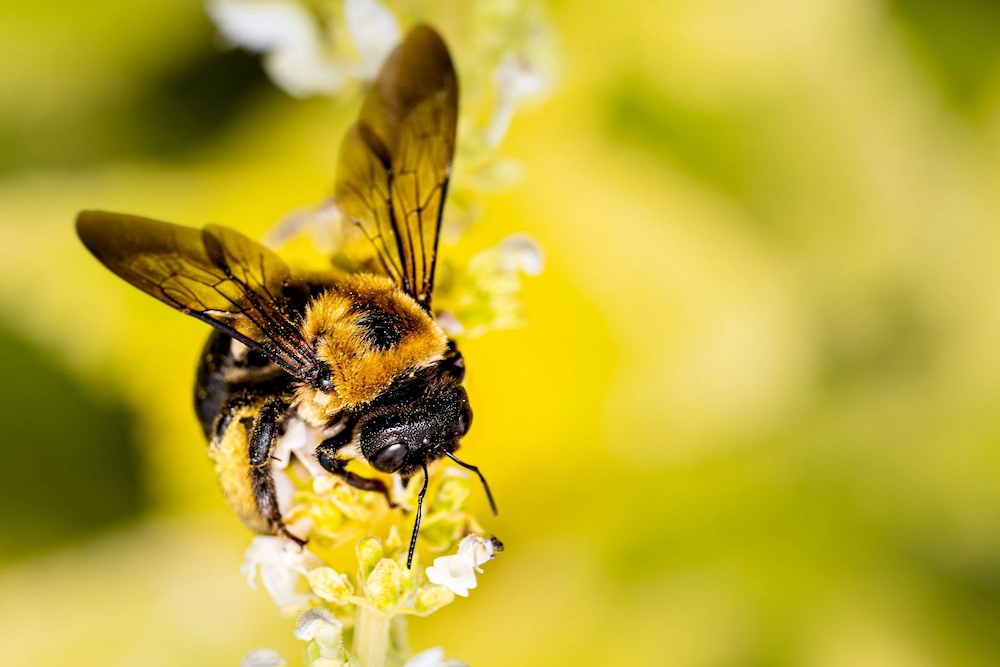
Many people wonder what do carpenter bees eat since they spend so much time around flowers. Carpenter bees primarily feed on nectar, which provides the energy needed for flying and daily activity.
They also collect pollen, which serves as an important food source for their developing offspring. Female carpenter bees gather pollen and nectar during foraging trips and store these resources within nesting chambers.
Unlike wood damaging insects such as termites, carpenter bees do not consume the wood they tunnel through. Their diet comes almost entirely from flowering plants and other natural food sources.
How Carpenter Bees Find Food
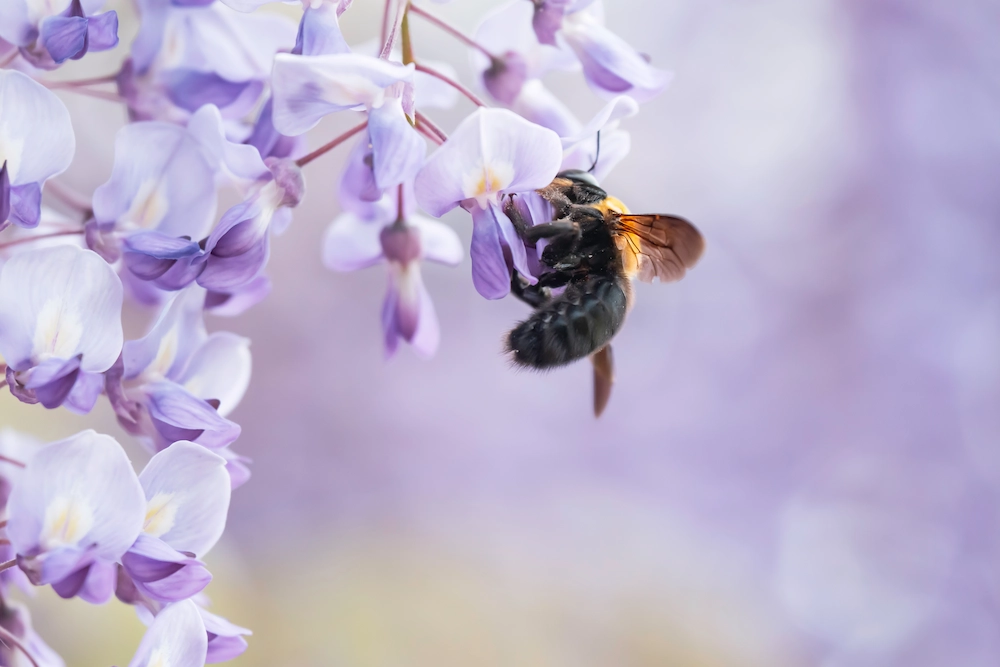
Learning how carpenter bees find food provides insight into their value as pollinators. Carpenter bees are attracted to flowers rich in nectar and pollen, and they can travel considerable distances while foraging.
Their excellent vision helps them identify flowering plants, while memory allows them to return to productive feeding locations repeatedly. As they move between flowers, pollen is transferred from one plant to another, supporting pollination.
Because carpenter bees are active pollinators, they contribute to the reproduction of many flowering plants found in gardens, landscapes, and natural environments.
Interesting Facts About Carpenter Bees
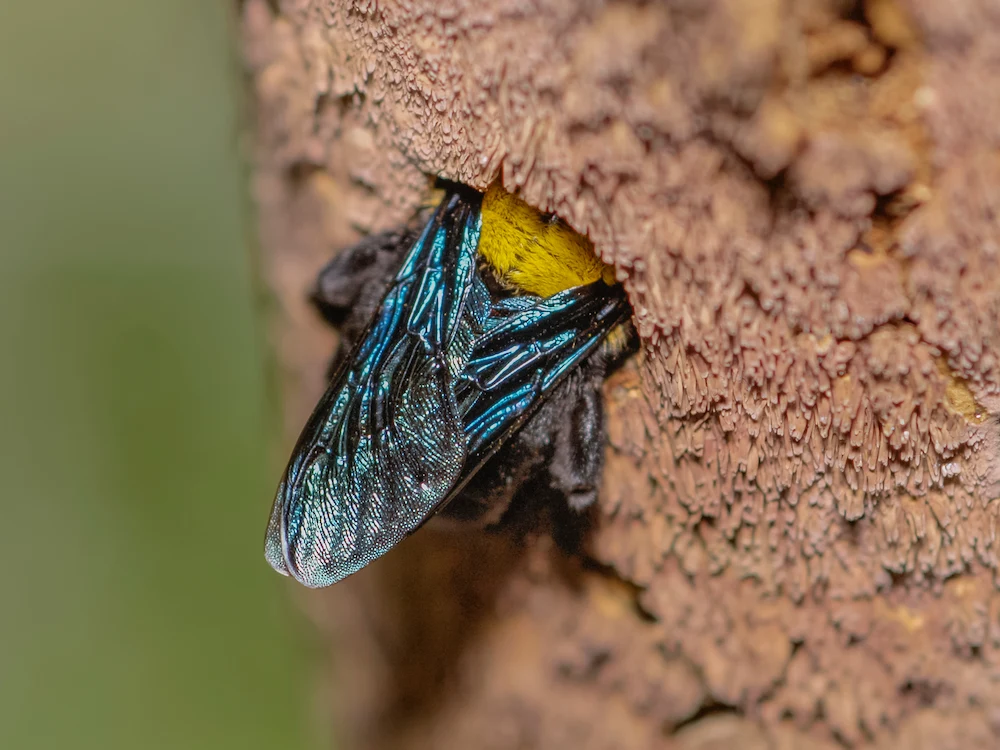
There are many interesting facts about carpenter bees that homeowners may not know. These insects have unique behaviors that make them different from social bee species.
Some fascinating facts include:
- Carpenter bees are excellent pollinators of many flowering plants.
- Male carpenter bees cannot sting.
- Females often reuse old nesting tunnels.
- Carpenter bees create nearly perfect circular entrance holes in wood.
These characteristics make carpenter bees both beneficial insects and occasional structural pests depending on where they choose to nest.
Managing Carpenter Bee Activity Around Your Home
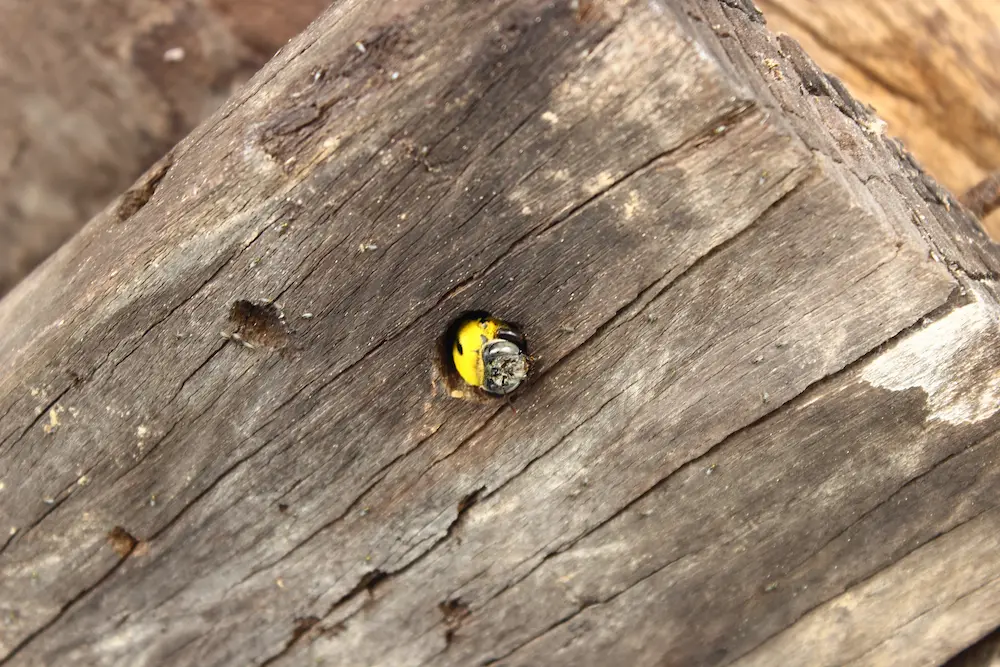
While carpenter bees play an important ecological role, homeowners may want to discourage nesting in wooden structures. Prevention focuses on making wood less attractive for nesting.
Painting or sealing exposed wood can help reduce nesting activity because carpenter bees prefer untreated surfaces. Regular inspections of decks, fences, and eaves can also help identify new activity before tunnels expand.
If carpenter bee activity becomes excessive, professional pest control services can evaluate the situation and recommend appropriate solutions. Learn more about protecting your property here.
Final Thoughts
Understanding carpenter bee life and behavior reveals how fascinating these insects truly are. Their ability to excavate nests, forage for nectar, and contribute to pollination makes them an important part of the environment.
By learning about how carpenter bees build nests, what do carpenter bees eat, and their unique nesting habits, homeowners can better understand when carpenter bees are beneficial and when professional management may be necessary. Contact us for a free quote on our dependable pest control services today!
Citations
Carpenter bee life cycle: What you need to know. (n.d.). Best Bee Brothers. Retrieved June 19, 2026, from https://bestbeebrothers.com/pages/lifecycle-of-a-carpenter-bee?srsltid=AfmBOooNbPZMty_RLcTyeEBkudlA_tUYIlCHXW1V2b_B_DAAAeKlP12t